


- Overview:How to Fix Salty, Spicy, or Burnt Food (Real Solutions)
- How to Fix Food: Common Cooking Mistakes and Their Solutions
- Quick Answer: How Do You Fix Food Mistakes?
- Why Common Cooking Mistakes Happen
- How to Fix Salty Food
- Add More Ingredients
- Dilute the Dish
- Balance with Acidity
- Add Dairy
- How to Fix Overly Spicy FoodWhen food becomes too spicy, the goal is to reduce the concentration of capsaicin while maintaining flavor.
- Add Dairy Products
- Increase the Quantity
- Add Mild Sweetness
- Use Acidic Ingredients
- How to Fix Burnt Food
- Remove the Burnt Portion
- Transfer Immediately
- Add Fresh Liquid
- Balance Flavors
- Bonus Kitchen Rescue Tips
- Quick Reference Table: How to Fix Food
- How to Prevent Cooking Mistakes
- Frequently Asked Questions (FAQs)
- 1. How to fix food that is too salty?
- 2. What reduces spiciness in food?
- 3. Can burnt food be saved?
- 4. Does potato really remove excess salt from food?
- 5. How do chefs fix overly spicy curry?
- 6. What should I do if soup becomes too salty?
- 7. How can I remove burnt taste from food?
- 8. Can sugar fix salty or spicy food?
Overview:How to Fix Salty, Spicy, or Burnt Food (Real Solutions)
Learn simple, real-life solutions to fix salty, spicy, or burnt food. Save your meals, rescue dinner disasters, and cook like a pro with these practical kitchen hacks.
How to Fix Food: Common Cooking Mistakes and Their Solutions
Every home cook makes mistakes in the kitchen. Whether you’ve added too much salt, made a dish unbearably spicy, or accidentally burnt dinner, knowing how to fix food can save your meal and reduce food waste. The good news is that most cooking errors are easier to correct than you might think.
In this guide, you’ll learn how to fix food hacks and proven cooking mistakes and solutions that can help you recover from common kitchen disasters without starting over.
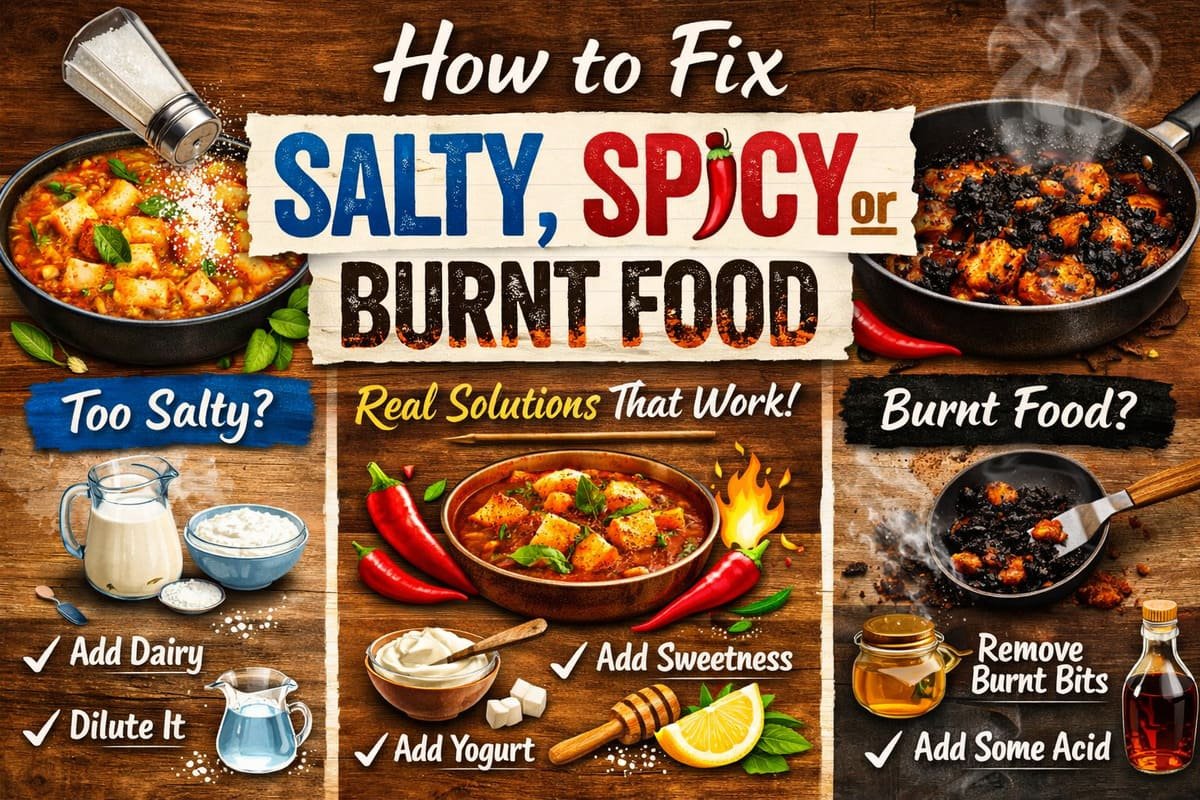
Quick Answer: How Do You Fix Food Mistakes?
The best way to fix food depends on the problem:
- Fix salty food by diluting it or adding more ingredients.
- Fix spicy food by using dairy products or increasing the quantity of the dish.
- Fix burnt food by removing the burnt portion immediately and transferring the rest to a clean pan.
- Fix bland food by balancing flavors with salt, acid, herbs, and spices.
- Fix watery dishes by reducing excess liquid or using natural thickeners.
Why Common Cooking Mistakes Happen
Most kitchen mishaps occur because of rushed measurements, high cooking temperatures, or seasoning adjustments made too late in the cooking process. Understanding these common cooking mistakes can help you avoid them in the future while also making it easier to fix food when something goes wrong.
How to Fix Salty Food
Adding too much salt is one of the most common cooking mistakes, but it can usually be corrected.
Add More Ingredients
Increase the quantity of unsalted ingredients such as vegetables, rice, pasta, or protein. This helps spread the salt across a larger volume of food.
Dilute the Dish
For soups, curries, and sauces, add water, unsalted stock, or coconut milk to reduce salt concentration.
Balance with Acidity
A small amount of lemon juice, lime juice, or vinegar can help balance salty flavors and brighten the dish.
Add Dairy
Milk, cream, yogurt, or coconut cream can soften excessive saltiness, especially in curries and rich sauces.
Pro Tip: Taste after each adjustment to avoid overcorrecting.
How to Fix Overly Spicy FoodWhen food becomes too spicy, the goal is to reduce the concentration of capsaicin while maintaining flavor.
Add Dairy Products
Yogurt, cream, milk, butter, and paneer help neutralize heat and create a smoother flavor profile.
Increase the Quantity
Adding extra vegetables, rice, lentils, or protein can dilute the spice level naturally.
Add Mild Sweetness
A small amount of sugar, honey, or jaggery can help balance excessive heat in sauces and curries.
Use Acidic Ingredients
Lemon juice or vinegar can brighten flavors and reduce the perception of spice.
Pro tip: Avoid adding more oil—it spreads heat instead of reducing it.
How to Fix Burnt Food
Burnt food may seem impossible to save, but quick action can often rescue the meal.
Remove the Burnt Portion
Do not scrape the bottom of the pan. Only use the unburnt food.
Transfer Immediately
Move the unaffected portion to a clean pot or pan as soon as possible to prevent the burnt flavor from spreading.
Add Fresh Liquid
A little water, stock, cream, or coconut milk can help soften minor burnt notes.
Balance Flavors
Adding fresh herbs, tomatoes, lemon juice, or a small amount of sweetness can help mask slight bitterness.
Pro tip: Prevention works best—cook on medium heat, stir frequently, and use heavy-bottomed cookware.
Bonus Kitchen Rescue Tips
- Taste as you cook; small adjustments early save bigger disasters later.
- Keep “rescue ingredients” handy: yogurt, cream, potatoes, lemon, and coconut milk.
- Learn flavor balancing: salt, acid, fat, sweetness, and spice work together to save dishes.
Kitchen mishaps happen to everyone. The trick is knowing how to fix them without stress. With these practical tips, most salty, spicy, or burnt meals can be rescued—and you’ll even feel like a kitchen pro in the process. Next time dinner goes wrong, don’t panic—just reach for one of these fixes and taste the difference.
Quick Reference Table: How to Fix Food
| Problem | Solution |
|---|---|
| Food Too Salty | Dilute, add ingredients, use acid |
| Food Too Spicy | Add dairy, sweetness, or more ingredients |
| Food Slightly Burnt | Transfer food and add fresh liquid |
| Bland Food | Add seasoning, herbs, acid, or spices |
| Watery Sauce | Simmer longer or use a thickener |
How to Prevent Cooking Mistakes
While kitchen rescue tips are useful, prevention is even better.
- Measure ingredients carefully.
- Season gradually instead of all at once.
- Cook over medium heat whenever possible.
- Stir dishes regularly.
- Taste food throughout the cooking process.
These simple habits can significantly reduce common cooking mistakes.
Learning how to fix food is one of the most valuable skills a home cook can develop. Whether you’re dealing with salty soup, spicy curry, or a slightly burnt meal, most kitchen disasters can be rescued with the right approach.
The next time a recipe doesn’t go as planned, don’t throw it away. Use these cooking mistakes and solutions to save the dish, reduce waste, and become a more confident cook.
Have you ever saved a “ruined” meal? Share your kitchen rescue stories in the comments below—we’d love to hear your hacks!
Frequently Asked Questions (FAQs)
1. How to fix food that is too salty?
You can fix salty food by adding more liquid, potatoes, dairy products, or extra ingredients to dilute the saltiness and balance the flavor.
2. What reduces spiciness in food?
Dairy products like yogurt, cream, or milk help reduce spice levels. You can also add sugar, coconut milk, or more base ingredients to balance the heat.
3. Can burnt food be saved?
Yes, slightly burnt food can often be rescued by transferring it to a new pan immediately and avoiding scraping the burnt layer from the bottom.
4. Does potato really remove excess salt from food?
Potatoes can absorb some liquid and mild saltiness, but the most effective method is usually dilution by adding more ingredients or liquid.
5. How do chefs fix overly spicy curry?
Chefs commonly use cream, butter, yogurt, coconut milk, or additional gravy ingredients to reduce heat and restore balance.
6. What should I do if soup becomes too salty?
Add water, unsalted broth, cream, or extra vegetables to dilute the salt concentration and improve the taste.
7. How can I remove burnt taste from food?
Transfer the food to a clean pan immediately, avoid stirring the burnt portion, and add fresh herbs, spices, or a little sweetness to mask the flavor.
8. Can sugar fix salty or spicy food?
A small amount of sugar can help balance excessive spice or salt, but it should be used carefully to avoid changing the dish’s overall flavor.
I share more cooking tips and food breakdowns here: Follow Bakaasurs on Instagram
Also Read: One-Pot Meals for Busy Weekdays (Indian & Fusion)
Check out: The Secret Science of Flavor: Why We Crave Certain Foods
Check out: Exploring Camel Milk: A Superfood Worth Sampling