

- Pani Puri (Golgappa): History, Origin, Ingredients, 8 Popular Varieties & Interesting Facts
- What Is Pani Puri?
- History and Origin of Pani Puri
- The Mythological Story Behind Pani Puri
- What Are the Main Ingredients of Pani Puri?
- Puri
- Filling
- Flavored Water (Pani)
- Chutneys
- Which City Is Famous for Pani Puri?
- Is Pani Puri Healthy?
- Healthier Pani Puri Options
- How Many Calories Are in Pani Puri?
- 8 Popular Varieties of Pani Puri Across India
- 1. Pani Puri
- 2. Puchka (Phuchka)
- 3. Gupchup
- 4. Pani Ke Batashe
- 5. Golgappa
- 6. Pani Ke Patashe
- 7. Phulki
- 8. Pakodi
- What Is the Difference Between Pani Puri, Golgappa and Puchka?
- Best Time to Eat Pani Puri
- Interesting Facts About Pani Puri
- Frequently Asked Questions
- Who invented Pani Puri?
- What is the English name of Pani Puri?
- Is Pani Puri and Golgappa the same?
- What is Puchka?
- Can Pani Puri help with weight loss?
- Conclusion
Pani Puri (Golgappa): History, Origin, Ingredients, 8 Popular Varieties & Interesting Facts
Pani Puri is one of India’s most loved street foods. Known by different names such as Golgappa, Puchka, Gupchup, Phulki, and Pani Ke Patashe, this crispy and flavorful snack has won the hearts of millions across the Indian subcontinent.
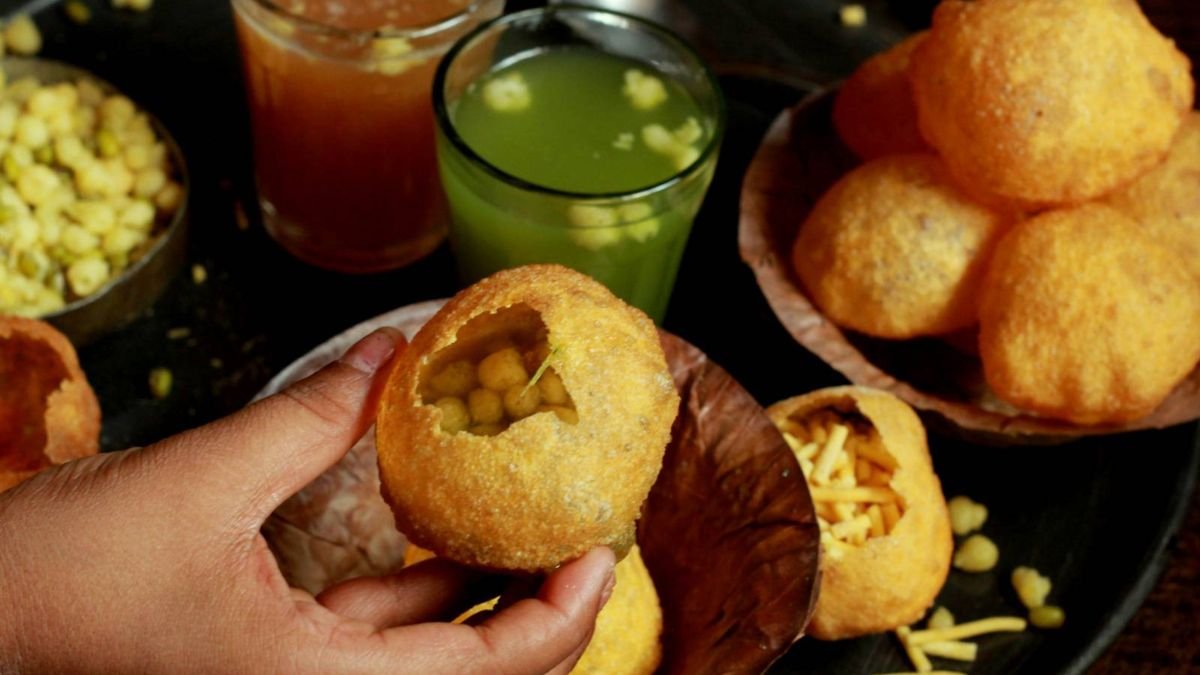
Made from hollow, crispy puris filled with potatoes, chickpeas or ragda and flavored water prepared using tamarind, mint, coriander, and spices, Pani Puri offers a unique combination of sweet, spicy, tangy, and crunchy flavors in a single bite.
In this guide, you’ll learn about the history of Pani Puri, its origin, ingredients, nutritional value, health aspects, and the different regional varieties enjoyed across India.
What Is Pani Puri?
Pani Puri is a popular Indian street food consisting of crispy hollow puris filled with boiled potatoes, chickpeas, white peas (ragda), or sprouts. The filled puris are served with tangy and spicy flavored water made using tamarind, mint, coriander, green chilies, black salt, and various spices.
The snack is known by different names across India:
- Pani Puri – Maharashtra, Karnataka, Madhya Pradesh
- Golgappa – Delhi, Punjab, Haryana
- Puchka (Phuchka) – West Bengal, Bihar, Assam
- Gupchup – Jharkhand, Chhattisgarh, Odisha
- Phulki – Uttar Pradesh and Nepal
- Pani Ke Patashe – Haryana
- Pakodi – Some parts of Gujarat
History and Origin of Pani Puri
The exact origin of Pani Puri remains uncertain, but food historians generally trace its roots to the ancient Indian kingdom of Magadha, located in present-day Bihar.
Historical references suggest that an early form of Pani Puri known as “Phulki” was consumed in the region centuries ago. Over time, the snack evolved and spread across different states, where local communities adapted the ingredients and flavors according to regional preferences.
Today, Pani Puri has become one of the most recognizable street foods in India and neighboring countries such as Nepal, Bangladesh, and Pakistan.
The Mythological Story Behind Pani Puri
According to a popular legend from the Mahabharata, the first version of Pani Puri was created by Draupadi.
After marrying the Pandavas, Draupadi was given a challenge by her mother-in-law Kunti. Since the Pandavas were living in exile and resources were limited, Kunti handed Draupadi a small amount of leftover vegetables and enough wheat dough to make only one puri.
She was asked to prepare a meal that could satisfy all five Pandavas.
Draupadi is believed to have created a unique dish by combining the ingredients and serving them creatively. Many people consider this dish to be the earliest inspiration for modern-day Pani Puri.
Although this story is part of mythology rather than historical evidence, it remains a fascinating part of Indian food culture.
What Are the Main Ingredients of Pani Puri?
A traditional Pani Puri typically contains:
Puri
- Semolina (sooji) or wheat flour
- Deep-fried until crispy and hollow
Filling
- Boiled potatoes
- White peas (ragda)
- Chickpeas
- Sprouts (optional)
Flavored Water (Pani)
- Tamarind
- Mint leaves
- Coriander leaves
- Green chilies
- Ginger
- Lemon juice
- Black salt
- Chaat masala
- Roasted cumin powder
Chutneys
- Tamarind chutney
- Date chutney
- Sweet-spicy chutney
Which City Is Famous for Pani Puri?
While every region has its own beloved version, Mumbai is often regarded as one of the most famous cities for Pani Puri.
Mumbai-style Pani Puri typically includes:
- Ragda (white peas)
- Mashed potatoes
- Sweet tamarind chutney
- Spicy mint water
- Sukha puri served at the end
Popular Pani Puri stalls can be found throughout Mumbai, and many food lovers consider the city one of the best destinations for experiencing authentic street-style Pani Puri.
Is Pani Puri Healthy?
Pani Puri can be enjoyed as part of a balanced diet when consumed in moderation.
The nutritional value depends largely on the ingredients used and the preparation method.
Benefits:
- Contains potatoes, chickpeas, and peas that provide carbohydrates and some protein.
- Mint, coriander, ginger, and tamarind offer natural antioxidants.
- Homemade versions can be healthier with better-quality ingredients.
Things to Consider:
- Deep-fried puris increase calorie content.
- Excess sodium from flavored water may cause temporary water retention.
- Street food hygiene can vary from place to place.
Healthier Pani Puri Options
To make Pani Puri healthier at home:
- Use whole wheat puris.
- Reduce frying oil absorption.
- Use sprouts, chana, or moong instead of only potatoes.
- Prepare fresh mint and cumin water.
- Limit sweet chutneys high in sugar.
How Many Calories Are in Pani Puri?
A single Pani Puri generally contains approximately 30–40 calories, depending on the filling and preparation method.
A serving of 6 Pani Puris may contain around:
| Nutrient | Approximate Amount |
|---|---|
| Calories | 180–240 |
| Carbohydrates | 30–40g |
| Protein | 4–8g |
| Fat | 5–10g |
Values vary depending on ingredients and serving size.
8 Popular Varieties of Pani Puri Across India
India’s diversity has given rise to several regional versions of Pani Puri.
1. Pani Puri
Popular in Maharashtra, Karnataka, Madhya Pradesh, Tamil Nadu, and Nepal.
Prepared with crispy puris filled with potatoes, ragda, tamarind chutney, and spicy mint water.
2. Puchka (Phuchka)
Popular in West Bengal, Bihar, Jharkhand, and Assam.
Puchkas are usually made using wheat flour and filled with mashed potatoes and boiled gram. The water is often tangier and spicier than regular Pani Puri.
3. Gupchup
Common in Jharkhand, Odisha, and Chhattisgarh.
This variation often uses ragda as filling and is known for its spicy flavored water.
4. Pani Ke Batashe
Popular in Lucknow and parts of Uttar Pradesh.
These often feature a combination of potato filling and unique sweet-and-spicy flavors.
5. Golgappa
Famous in Delhi, Punjab, Jammu & Kashmir, and Himachal Pradesh.
Golgappas are known for their extra-crispy puris and flavorful combination of chickpeas, potatoes, tamarind, and mint water.
6. Pani Ke Patashe
Popular in Haryana.
These are typically filled with black gram and potatoes and served with tangy mint water and a squeeze of lemon.
7. Phulki
Common in Uttar Pradesh and Nepal.
Phulki often contains ragda, onions, coriander, tamarind chutney, and highly spiced flavored water.
8. Pakodi
Found in parts of Gujarat and Kutch.
This version commonly includes potatoes, chickpeas, moong, sev, onions, and spicy green chili water.
What Is the Difference Between Pani Puri, Golgappa and Puchka?
| Feature | Pani Puri | Golgappa | Puchka |
|---|---|---|---|
| Popular Region | Maharashtra | Delhi & North India | West Bengal |
| Filling | Potato & Ragda | Potato & Chickpeas | Potato & Gram |
| Water Flavor | Balanced | Sweet & Spicy | Tangy & Spicy |
| Puri Texture | Crisp | Extra Crunchy | Slightly Softer |
| Taste Profile | Balanced | Sweet-Spicy | Tangier |
Best Time to Eat Pani Puri
If you enjoy Pani Puri occasionally, afternoon or lunchtime can be a suitable time.
Since the snack contains carbohydrates and sodium, eating large quantities late at night may contribute to temporary water retention and bloating for some individuals.
Moderation remains the key to enjoying this popular street food.
Interesting Facts About Pani Puri
- Pani Puri is one of India’s most popular street foods.
- It is known by more than seven different names across India.
- Ancient Magadha is often associated with its historical origins.
- The Mahabharata legend links its creation to Draupadi.
- Every state has developed its own unique variation.
- Mumbai, Delhi, Kolkata, Lucknow, and Ahmedabad all have distinct styles of serving it.
- Pani Puri has become popular in several countries outside India.
Frequently Asked Questions
Who invented Pani Puri?
Historically, Pani Puri is believed to have originated in the ancient kingdom of Magadha. Mythologically, it is associated with Draupadi from the Mahabharata.
What is the English name of Pani Puri?
There is no exact English equivalent. It is commonly described as crispy hollow fried shells filled with flavored water and savory fillings.
Is Pani Puri and Golgappa the same?
Yes. Golgappa is the North Indian name for Pani Puri. The ingredients and preparation may vary slightly by region.
What is Puchka?
Puchka is the Bengali version of Pani Puri, usually known for its tangier and spicier flavor profile.
Can Pani Puri help with weight loss?
Pani Puri itself is not a weight-loss food, but healthier homemade versions prepared with controlled ingredients can fit into a calorie-conscious diet.
Conclusion
Whether you call it Pani Puri, Golgappa, Puchka, Gupchup, Phulki, or Pani Ke Patashe, this iconic Indian street food continues to unite food lovers across regions. Its fascinating history, regional diversity, and irresistible flavor make it one of India’s most celebrated snacks.
From the streets of Mumbai and Delhi to the lanes of Kolkata and Lucknow, every bite of Pani Puri tells a story of India’s rich culinary heritage.
I share more cooking tips and food breakdowns here: Follow Bakaasurs on Instagram
Check out: 6 Best Places To Have Panipuri In Mumbai | Panipuri
Check out: Top 10 Street Foods You Must Try in Mumbai: A Foodie’s Guide
Check out: Mumbra Food | 8 Best Places to eat in Mumbra
Check out: Food In Punjab | Punjab Cuisine | 5 Amazing Facts